



Hey there! As a supplier of Nylon Back To Back Hook And Loop, I often get asked if this nifty product can be used on plastic. Well, let's dive right into it and find out.
First off, let's talk a bit about what Nylon Back To Back Hook And Loop is. It's a type of fastener that consists of two strips – one with tiny hooks and the other with small loops. When you press them together, they stick, and when you pull them apart, they separate. Nylon is the material used to make these strips, which gives them some great properties like durability, flexibility, and resistance to wear and tear. You can check out more about it on our Nylon Back To Back Hook and Loop page.
Now, when it comes to using it on plastic, the answer is a bit of a "it depends." There are several factors that come into play here.
The Type of Plastic
Plastic comes in all sorts of types, and each one has its own characteristics. Some plastics are smooth and hard, like polycarbonate or acrylic. Others are more flexible and have a bit of give, like polyethylene or polypropylene.
For smooth and hard plastics, the Nylon Back To Back Hook And Loop can work quite well. The hooks can grip onto the surface, creating a decent bond. However, the strength of the bond might vary depending on how smooth the plastic is. If the plastic has a super glossy finish, the hooks might not be able to get a good hold, and the fastener could come loose easily.
On the other hand, flexible plastics can be a bit trickier. The movement and flexibility of the plastic can cause the hook and loop fastener to come undone over time. But if the application doesn't involve a lot of movement or stress, it can still be a viable option.
Surface Preparation
Another important factor is the surface preparation of the plastic. If the plastic surface is dirty, greasy, or has any debris on it, the Nylon Back To Back Hook And Loop won't adhere properly. It's crucial to clean the plastic surface thoroughly before applying the fastener. You can use a mild detergent and water to clean it, and then dry it completely.

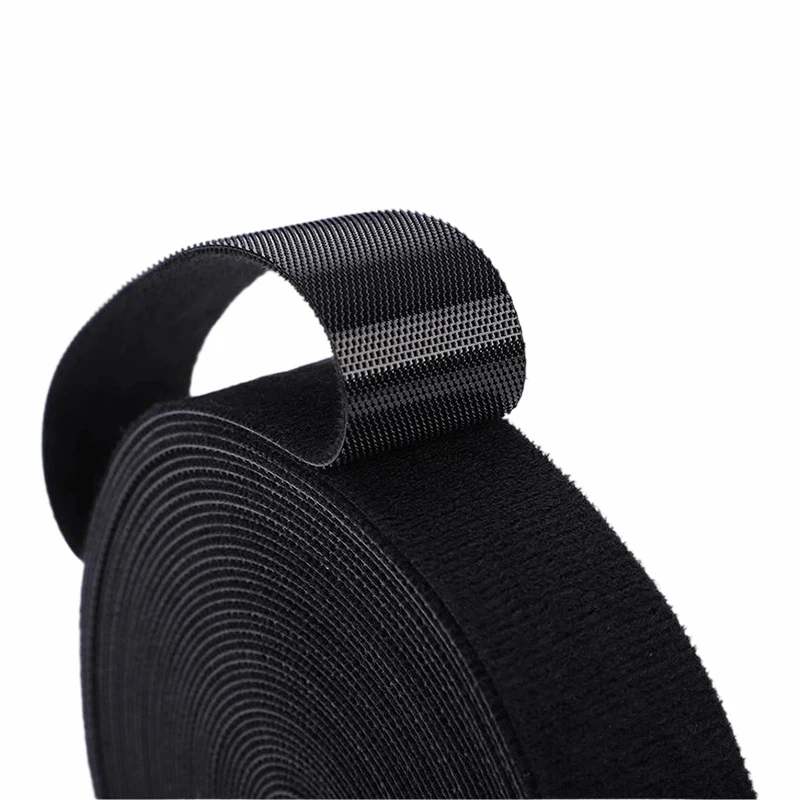
In some cases, you might also want to roughen up the surface slightly. This can be done using fine-grit sandpaper. By creating a bit of texture on the plastic surface, the hooks of the fastener have more to grab onto, which can improve the bond strength.
Application Method
How you apply the Nylon Back To Back Hook And Loop on the plastic also matters. Most of these fasteners come with an adhesive backing. When applying it to the plastic, make sure to press it firmly and evenly. You can use a roller or a flat object to apply pressure and ensure good contact between the fastener and the plastic surface.
If you're using the fastener in a high-stress or high-movement application, you might want to consider using additional mechanical fasteners or adhesives to reinforce the bond. This can help prevent the fastener from coming loose over time.
Environmental Conditions
The environment in which the plastic and the fastener will be used is also a key consideration. If the application is in a high-temperature or high-humidity environment, it can affect the performance of the Nylon Back To Back Hook And Loop.
High temperatures can cause the plastic to expand, which might loosen the bond between the fastener and the plastic. Similarly, high humidity can make the plastic surface damp, which can also reduce the adhesion of the fastener. In such cases, you might want to consider using a specialized version of the fastener, like our Fireproof Back To Back Hook and Loop or ESD Safe Back To Back Hook and Loop, which are designed to withstand specific environmental conditions.
Real-World Applications
There are many real-world applications where Nylon Back To Back Hook And Loop is used on plastic. For example, in the electronics industry, it's often used to secure plastic covers or panels on electronic devices. The fastener provides a convenient way to access the internal components for maintenance or repairs.
In the automotive industry, it can be used to attach plastic trim pieces or accessories. It allows for easy installation and removal, which is great for customization or replacement.
In the home improvement and DIY world, Nylon Back To Back Hook And Loop is a popular choice for organizing plastic storage containers. You can attach the fastener to the lids and the containers, making it easy to open and close them.
Testing and Evaluation
Before using Nylon Back To Back Hook And Loop on a large scale in your application, it's always a good idea to conduct some testing. You can take a small sample of the plastic and the fastener and perform some adhesion tests. This can help you determine if the fastener will work well in your specific application and if any adjustments need to be made.
In conclusion, Nylon Back To Back Hook And Loop can be used on plastic, but it's important to consider the type of plastic, surface preparation, application method, and environmental conditions. With the right approach, it can provide a reliable and convenient fastening solution for a wide range of plastic applications.
If you're interested in learning more about our Nylon Back To Back Hook And Loop products or have any questions about using them on plastic, feel free to reach out. We're here to help you find the best fastening solution for your needs. Let's start a conversation and see how we can work together!
References
- ASTM International. "Standard Test Methods for Peel Resistance of Adhesives (T-Peel Test)." ASTM D1876-08(2015).
- ISO 4624:2016. "Paints and varnishes — Pull-off test for adhesion."


