

Hey there! As a supplier of hook and loop ties by material, I've been getting a lot of questions lately about how different materials of these ties perform in windy conditions. So, I thought I'd share some insights based on my experience and a bit of research.
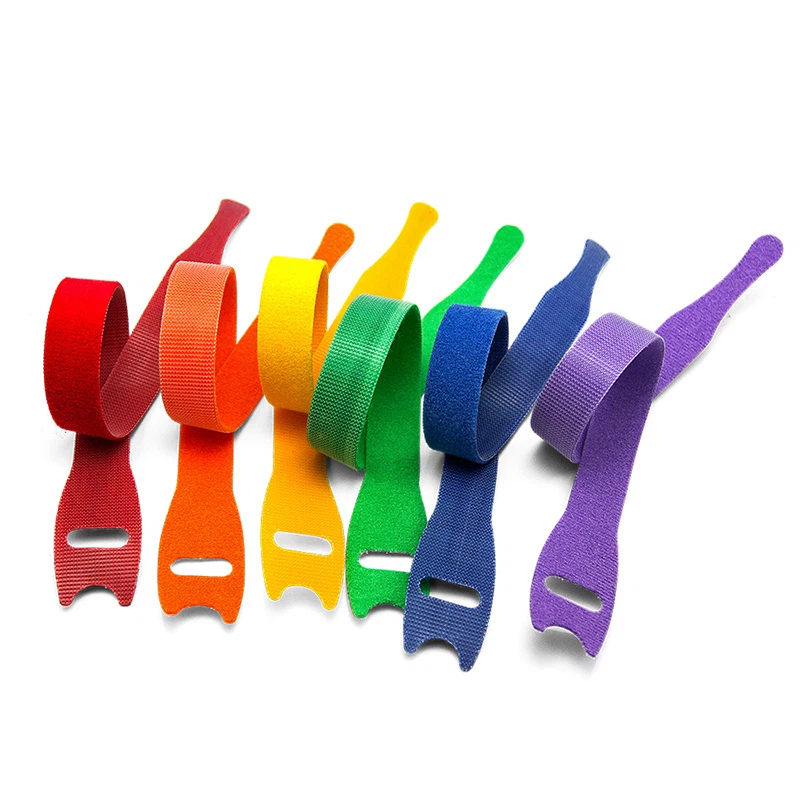
Let's start with the basics. Hook and loop ties, also known as Velcro ties, are super handy for organizing cables, bundling items, and all sorts of other uses. They come in different materials, each with its own set of characteristics that can affect how well they hold up in the wind.
Nylon Hook and Loop Cable Ties
Nylon is one of the most common materials for hook and loop ties. You can check out our Nylon Hook and Loop Cable Ties on our website. Nylon ties are known for their strength and durability. In windy conditions, nylon ties tend to do pretty well. They have a good amount of flexibility, which allows them to bend with the wind rather than break. The hooks and loops on nylon ties are usually quite strong, so they can maintain a secure hold even when there's some movement caused by the wind.
However, one thing to keep in mind is that if the wind is extremely strong, nylon ties might start to loosen over time. The constant flapping and tugging can cause the hooks and loops to gradually separate. But for most everyday windy situations, nylon ties are a reliable choice. They're also relatively lightweight, which means they won't add too much extra weight to whatever you're tying up, reducing the risk of the whole bundle being blown around.
ESD Safe Hook and Loop Cable Ties
ESD (Electrostatic Discharge) safe hook and loop ties are designed to prevent static electricity from building up. These ties are often used in electronic environments where static can damage sensitive components. Our ESD Safe Hook and Loop Cable Ties are a great option for such applications.
In windy conditions, ESD safe ties perform similarly to nylon ties in terms of their physical strength. They're made from materials that are strong enough to withstand normal wind forces. The key difference is in their anti - static properties. The wind can sometimes cause friction, which can generate static electricity. ESD safe ties help to dissipate this static, which is an added bonus in situations where static is a concern.
One potential drawback is that the materials used to make ESD safe ties might be a bit more delicate in some cases. So, in extremely high - wind situations, there's a slightly higher risk of the ties getting damaged compared to regular nylon ties. But for most indoor or outdoor environments with moderate wind, they work just fine.
Fireproof Hook and Loop Cable Ties
Fireproof hook and loop ties are essential in areas where there's a risk of fire. You can find our Fireproof Hook and Loop Cable Ties on our site. These ties are made from special fire - resistant materials, which also affect their performance in windy conditions.
Fireproof ties are generally quite rigid compared to nylon or ESD safe ties. This rigidity can be both an advantage and a disadvantage in the wind. On the plus side, the rigidity means that the ties are less likely to flap around in the wind, which can help to keep a more stable hold on the items they're tying. However, because they're less flexible, they might be more prone to breaking if the wind is strong enough to put a lot of stress on them.

Another thing to consider is that the fire - resistant materials might be a bit heavier than other types of hook and loop tie materials. This extra weight can make the bundle more susceptible to being blown around, especially if it's not properly secured. But in many cases, the fire - safety benefits outweigh these potential drawbacks.
Testing in Windy Conditions
To really understand how these different materials perform, we've done some testing in various windy conditions. We set up test areas with different wind speeds, ranging from a gentle breeze to a strong gusty wind. We tied up bundles of cables using each type of hook and loop tie and observed how they held up over time.
In the gentle breeze, all three types of ties performed well. The nylon ties were flexible and moved with the wind, the ESD safe ties maintained their anti - static properties while holding the cables securely, and the fireproof ties stayed in place without much movement.
As the wind speed increased, the nylon ties started to show a bit of wear and tear. Some of the hooks and loops began to separate, but they still held the cables together for the most part. The ESD safe ties also held up, but we did notice a bit more movement in the bundles compared to the fireproof ties. The fireproof ties, with their rigidity, remained relatively stable, but we did have to be careful not to over - stress them as the wind got stronger.
Choosing the Right Tie for Windy Conditions
So, how do you choose the right hook and loop tie for windy conditions? It really depends on your specific needs. If you're just looking for a general - purpose tie for everyday use in normal windy situations, nylon ties are a great choice. They're strong, flexible, and affordable.
If you're working in an electronic environment where static is a concern, ESD safe ties are the way to go. They'll protect your sensitive components while still holding up well in the wind.
For areas where fire safety is a priority, fireproof ties are essential. Just be aware of their rigidity and extra weight, and make sure to secure the bundles properly.
Conclusion
In conclusion, different materials of hook and loop ties have different performances in windy conditions. Nylon ties are flexible and reliable for most situations, ESD safe ties offer anti - static protection along with good wind resistance, and fireproof ties provide stability but require a bit more care in strong winds.
If you're interested in purchasing any of our hook and loop ties, whether it's for windy conditions or other applications, feel free to reach out to us. We're here to help you find the right tie for your needs.
References
- Personal experience as a hook and loop ties by material supplier.
- Internal testing data on hook and loop ties in windy conditions.


