


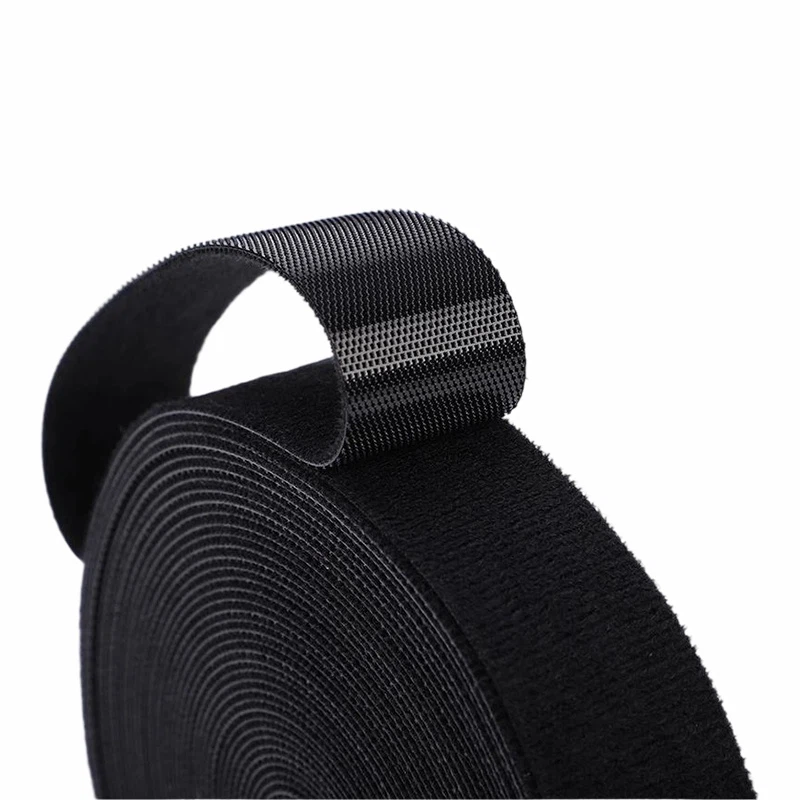
As a seasoned supplier of Nylon Back To Back Hook And Loop, I've witnessed firsthand the importance of quality testing in this industry. Nylon Back To Back Hook And Loop is a versatile fastening solution used in various applications, from clothing and footwear to industrial and automotive uses. Ensuring its quality is crucial for both suppliers and end - users. In this blog, I'll share some effective ways to test the quality of Nylon Back To Back Hook And Loop.
Tensile Strength Testing
Tensile strength is one of the most fundamental properties to assess in Nylon Back To Back Hook And Loop. It measures the maximum amount of tensile (pulling) stress that the material can withstand before breaking. To conduct this test, we use a specialized tensile testing machine.
First, we cut a sample of the Nylon Back To Back Hook And Loop to a specific size, usually following industry standards. The sample is then clamped at both ends of the testing machine. The machine gradually applies a pulling force until the sample breaks. During the process, the machine records the force applied and the elongation of the sample.
A high - quality Nylon Back To Back Hook And Loop should have a consistent and high tensile strength. If the tensile strength is too low, it may break easily during normal use, especially in applications where there is a lot of pulling or stretching. For example, in a heavy - duty industrial setting where the hook and loop is used to secure large equipment, low tensile strength could lead to equipment failures and safety hazards.
Peel Strength Testing
Peel strength refers to the force required to separate the hook and loop sides of the fastener. This is an important test because it determines how well the hook and loop will stay attached in real - world applications.
To perform a peel strength test, we prepare a sample of the Nylon Back To Back Hook And Loop and firmly press the hook and loop sides together. Then, one end of the sample is fixed, and a peeling force is applied at a constant rate. The force required to peel the two sides apart is measured.
Good quality Nylon Back To Back Hook And Loop should have a sufficient peel strength. If the peel strength is too low, the fastener may come apart easily, causing the items it secures to become loose. For instance, in clothing, a low - peel - strength hook and loop may cause a garment to open unexpectedly, which is not only inconvenient but also unappealing.
Shear Strength Testing
Shear strength measures the ability of the Nylon Back To Back Hook And Loop to resist forces that act parallel to the surface of the fastener. This is important in applications where there are lateral forces acting on the hook and loop.

In a shear strength test, a sample of the hook and loop is attached to two flat surfaces. A force is then applied parallel to the surface of the fastener until it fails. The maximum force that the hook and loop can withstand before failure is recorded as the shear strength.
In automotive applications, for example, where the hook and loop may be used to secure interior components, good shear strength is essential to prevent the components from shifting due to vibrations or sudden movements of the vehicle.
Abrasion Resistance Testing
Abrasion resistance is crucial for Nylon Back To Back Hook And Loop, especially in applications where it is subject to repeated rubbing or friction. To test abrasion resistance, we use an abrasion testing machine.
The sample is placed in the machine, and a rubbing element is applied to the surface of the hook and loop under a specific pressure. The machine rubs the sample for a set number of cycles. After the test, we examine the sample for signs of wear, such as loss of hooks or loops, fraying, or a decrease in fastening performance.
High - quality Nylon Back To Back Hook And Loop should have good abrasion resistance. In outdoor gear, like backpacks, where the hook and loop may rub against rough surfaces, poor abrasion resistance can lead to premature failure of the fastener.
Chemical Resistance Testing
In some applications, Nylon Back To Back Hook And Loop may come into contact with various chemicals. Chemical resistance testing helps us determine how well the hook and loop can withstand exposure to these chemicals.
We immerse samples of the Nylon Back To Back Hook And Loop in different chemical solutions for a specified period. After the immersion, we examine the samples for changes in appearance, such as discoloration, swelling, or degradation. We also test the mechanical properties, such as tensile strength and peel strength, to see if they have been affected.
For example, in a laboratory or industrial environment where the hook and loop may be exposed to cleaning agents or solvents, good chemical resistance is necessary to ensure the long - term performance of the fastener.
Colorfastness Testing
Colorfastness is important, especially when the Nylon Back To Back Hook And Loop is used in applications where appearance matters, such as in fashion or interior design. To test colorfastness, we expose the samples to different environmental conditions, such as sunlight, water, and detergents.
For sunlight exposure, we place the samples under a light source that simulates sunlight for a certain period. We then compare the color of the exposed samples with unexposed samples to check for color fading. In the case of water and detergent testing, we soak the samples in water or detergent solutions and observe any color bleeding or fading.
High - quality Nylon Back To Back Hook And Loop should have good colorfastness. In a clothing item, for example, if the hook and loop fades or bleeds color, it can ruin the overall appearance of the garment.
Comparing with Other Materials
It's also beneficial to compare Nylon Back To Back Hook And Loop with other types of back - to - back hook and loop materials, such as Polyester Back To Back Hook and Loop and Fireproof Back To Back Hook and Loop.
Polyester Back To Back Hook And Loop may have different mechanical properties compared to nylon. For example, polyester may be more resistant to certain chemicals but may have lower tensile strength in some cases. Fireproof Back To Back Hook And Loop, on the other hand, is designed to resist fire, which is a property not typically associated with standard nylon hook and loop. By comparing these materials, we can better understand the unique advantages and limitations of Nylon Back To Back Hook And Loop.
Conclusion
Testing the quality of Nylon Back To Back Hook And Loop is a comprehensive process that involves multiple aspects, including tensile strength, peel strength, shear strength, abrasion resistance, chemical resistance, and colorfastness. By conducting these tests, we can ensure that the Nylon Back To Back Hook And Loop we supply meets the high - quality standards required by various industries.
If you're in the market for high - quality Nylon Back To Back Hook and Loop, I invite you to reach out for a detailed discussion on your specific requirements. We're committed to providing the best products and services to meet your needs.
References
- ASTM International standards on hook and loop fasteners testing
- Industry research reports on the performance of different hook and loop materials


